Showing posts with label Photographica. Show all posts

25 Sept 2010

A second, revised, edition of "Begleitbuch zu Ernst Jünger 'In Stahlgewittern'"


Ernst Jünger's original war diary Kriegstagebuch 1914-1918, edited by Helmuth Kiesel, is now published by Klett-Cotta (September 2010).

Professor Kiesel's work is thorough indeed. The book is a must for all who are interested in Jünger's war books. Kiesel uses the regimental history and my
Begleitbuch zu Ernst Jünger 'In Stahlgewittern' in order to place the text at the battlefield and map. The text is transcribed from the diary, not reproduced photographically, so it can not be described as a facsimile. That is not bad - the handwriting in Jünger's diary is very hard to read.

All drawings
Jünger made in the diary are reproduced photographically. That is excellent. Unfortunately they are printed in rather small black and white pictures.

Reproductions of Jünger's diary drawing in Kriegstagebuch 1914-1918 (black and white, to the left) and in Begleitbuch zu Ernst Jünger 'In Stahlgewittern' to the right (full colour and often full size).


There are now three books which in detail cover Jünger's World War I experiences - and one DVD. Apart from Kisels annotations there are my Begleitbuch zu Ernst Jünger 'In Stahlgewittern' (2007) and René Senteur, De Bazancourt à Favreuil: Sur les traces d'Ernst Jünger (2010). Then there is François Lagarde's impressive DVD-Rom Le rouge et le gris: Ernst Jünger dans la Grande Guerre (2007).The three books and the DVD are complements to each-other: Kiesel's is of course the literature student's first choice and Senteur's is the amateur military historian's. It should be noted that Kiesel do not use the photographs in Jünger's archive at the DLA. What makes Senteur's book and François Lagarde's DVD-Rom interesting in my view is that many original photographs from Jünger's archive at DLA are published here. There are no original diary drawings in Senteur's book though. In Begleitbuch zu Ernst Jünger "In Stahlgewittern" there are both drawings from the diary and photographs from the archive - not all drawings and photographs, but carefully chosen and of high quality.

Begleitbuch zu Ernst Jünger "In Stahlgewittern" has been sold out for a while. However, Mittler & Sohn Verlag plans to publish a second, revised edition this autumn (2010).

See a review of Kriegstagebuch 1914-1918, "Heut nachmittag fand ich zwei Finger- und Mittelhandknochen", by Lothar Müller, and an article, "Im Meer der Bewegungslosigkeit", by Kurt Kister in Süddeutsche Zeitung 22 September 2010. The Kurt Kister, who will be editor-in-chief of the newspaper, writes also about the Begleitbuch:

"[...]
Der Jünger-Interessierte glaubt die Tagebücher zu kennen; sie sind die Grundlage für die
Stahlgewitter, für Das Wäldchen 125 und für Feuer und Blut. Ausgewertet von Anderen wurden sie durchaus auch. Der Schwede Nils Fabiansson hat 2007 ein "Begleitbuch" zu den Stahlgewittern veröffentlicht. Es ist eine Art militärischer Reiseführer durch Jüngers vier Kriegsjahre; das vielfältige Material entstammt den Originaltagebüchern, Archiven, aber auch Reisen in Frankreich und Belgien. Erschienen ist Fabianssons Büchlein im Verlag E.S. Mittler & Sohn, in dem wiederum Jüngers In Stahlgewittern erstmals erschienen war (es gab zuvor im Jahre 1920 eine kleine Auflage im Selbstverlag).

Mit dem vielfältig bebilderten Fabiansson an der Seite kann der Leser die Tagebücher geografisch und militärhistorisch besser einordnen. Sie geben das Bild eines chaotischen Krieges durch die Augen des jungen Leutnants wieder, der sich als Archetyp des Kriegers fühlt. Soldaten, die mit Jünger kämpfen, sterben oder verwundet werden, sind in erster Linie Funktionäre der möglichst effizient organisierten Gewalt, die sich dem als Notwendigkeit empfundenen Wahnsinn des Materialkrieges ergeben.
[...]"
Further news:

The publisher Michael Klett, professor Helmut Kiesel and the journalist Julia Encke from Frankfurter Allgemeine Zeitung will discuss Jünger's war diary at Literaturhaus Stuttgart the 25th October 2010 at 20:00.

A new big Jünger exhibition will open in November 2010 at Deutsche Literaturarchiv Marbach (DLA): "
Ernst Jünger. Der Nachlass". Jünger's 260 diary notebooks will be exhibited.

Then in March 2011, when the DLA-exhibition will close, the Jüngerhaus in Wilflingen will re-open, after a renovation.


Photo from Das Begleitbuch zu Ernst Jünger 'In Stahlgewittern'. See earlier post here about Jünger's original war diary.


17 May 2010

"De Bazancourt à Favreuil: Sur les traces d'Ernst Jünger"


René Senteur has written and published a book about Ernst Jünger and his 1914-1918 war experience, De Bazancourt à Favreuil: Sur les traces d'Ernst Jünger (2010).

René Senteur writes about his book:
After years of research, I’d like to present to you my book on Ernst Jünger and the Great War. In this book, I’ve tried to place the actions and events described by Jünger in his work In Stahlgewittern (Storm of Steel) in their military and historical context. Every chapter deals with the corresponding chapter in Jüngers book and has been split up into 2 parts. The first part describes in detail the events and actions from a historical viewpoint: to what purpose the author and his brothers in arms of the 73rd Füsilier Regiment where there, what role did they play? Who were their adversaries? To what extent Storm of Steel is historically correct? The second part gives a description of the terrain in its actual condition, which helps to visualize the events described and could be used as a battlefield-guide. This book, for the moment only available in French, contains 160 pages in A4-format and over 250 illustrations: 110 colour photos amongst which recreations of some of the uniforms worn by Jünger, 120 BW photos most of which haven’t been published before and 20 colour maps. This book is an auto-publication and has been printed in 500 copies only. Price 30,00 € incl. VAT (+ shipping)

For any info-request or to order this book, please contact René Senteur via his web site Orages d'acier.

2 Dec 2009

Western Front photo books

Although there is certainly no lack of spectacular motives, there are not many photo books or documentary photography magazines with the Western Front as theme. However, about ten years ago two photo books appeared, both published in various editions, and both got follow-ups wich focus on particular areas of the western front. Then in 2007-2008 no less than four new Western Front photo books were published.


Cicatrices: La Grande Guerre aujourd'hui (Tallandier 2008), photograps by Jean Richardot and text by Stéphane Audoin-Rouzeau and Gerd Krumeich, both co-presidents of the steering committee of the Research Centre at the Historial the la grande guerre in Péronne.

The photographer Jean Richardot (born 1959) began his investigation into the landscapes of the First World War in 2000. He explores the battlefields in the North and East of France. His intention is not to create an inventory of vestiges, but to reveal places that, outside of official commemorations, preserve an emotional charge hardly dulled by time. The book was presented and photographs exhibited at the exhibition "Commémorer: hier, aujourd’hui, demain" ("Commemorating: yesterday, today, and tomorrow") at the Historial de la Grande Guerre October-December 2008.


Champs de bataille de la Grande Guerre: Traces et témoignages (Flammarion 2008), text by Laurent Loiseau and Géraud Benech, colour photographies by the professional British photographer Mike St Maur Sheil, who has been photographing the Western Front for several years, see Landscape Photography Courses and westernfrontphotography.com. A DVD follows with the book, with more of his photographs.

Mike St Maur Sheil's photographs of the Western Front has been exhibited at the Canadian War Museum in Ottawa and in conjunction with the Memorial Museum Passchendaele 1917 at six locations through-out New Zealand.


Mike St Maur Sheil out in the fields.

Mike St Maur Sheil uses a Kodak DCS Pro Slr 14n which gives him a 14Mb Raw file. He writes that he gets up early, stays out late and doesn't mind getting cold and wet. The special equipment a battlefield photographer needs, according to Mike St Maur Sheil:


  • Graduated neutral density filters are a real advantage as they enable you to control the contrast between the ground and the sky.
  • Tripod head quick release plates - they enable you to switch cameras easily and safely even when your hands are cold
  • Walking boots and good warm weatherproof clothing are essential - battlefields tend to be quite rugged places and shooting in bad weather heightens the atmosphere so I tend to shoot in all but the worst weather. A number of layers are better than one thick coat.
  • Kneeling pads - gardeners strap-on kneeling pads (available from any garden centre) keep your trousers dry when kneeling on wet grass and sharp stones out of your knees!
  • Batteries - generally speaking there is not a Jessops over the next hill, so do bring spare batteries and chargers.
  • Walking pole - I find it steadies me when crossing those rougher bits of ground.


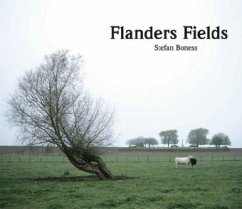
A Western Front photo book appeared in Germany in 2008, with colour photos by the professional German photographer Stefan Boneß and text by Tanja R. Müller, Flanders Fields: Eine fotografische Spurensuche auf den Schlachtfeldern des Ersten Weltkrieges (Bildschöne Bücher 2008). See photos published at independent.co.uk! See the web site of Stefan Boneß here. Also a collector's edition is published (limited to 3x10 copies, with signed print).


Verstild en Versteend/Weathered Witness: Relicten uit de Eerste Wereldoorlog from 2007 is a beautiful monocrome photography book with texts in both Dutch and English, by the photographer Patrick Goossens and text and research by Wim Degrande. Wim Degrande is well known among Western Front travellers and researchers. The book is published by Davidsfonds/Leuven (24 x 24 cm, 208 pages).

In combination with the publication of the book, a selection of the photographs could be seen in the exposition "Remembered and Forgotten" in the In Flanders Fields Museum at Ypres, July-August 2007.


Les Champs de la mémoire: Paysages de la Grande Guerre (Editions du Chêne 1998), by the British photographer John Foley and Anne Roze (author), has a preface by Jean Rouaud, the author of the 1990 bestseller Les Champs d'honneur (translations: Fields of Glory; Die Felder der Ehre; Ärans väg etc.), and was published in English already the following year, Fields of Memory: A Testimony to the Great War (Cassell 1999, and later paperback editions).


Also Traces de la grande guerre: Les vestiges oubliés de la mer du Nord à la Suisse (text in both English and French, published both in one and two volumes, Morval 1999), by the legendary French-American photographer Jean S. Cartier (born 1932, see more about J. S. Cartier here), has a preface by Jean Rouaud. Notice that there is also an older hardback edition of this book, published 1995 in a smaller edition.

From the photographer's web site: "This project, which aimed to record as many surviving vestiges of the conflict, was carried out over a twelve-year period with a large-format camera (4x5) along the 1914-1918 trench system stretching from the North Sea coast of Belgium to the French-Swiss border. More than 350 sites were surveyed."


The two later books above are very rare and expensive at the second-hand booksellers.


The Belgian/Netherland edition of National Geographic had an article, "Bewogen land", in the November 2004 issue, with some nice photographs by Tim Dirven.


This is an update of an older posting: Professional photography of the Western Front

1 Apr 2009

L’exposition "Histoires d’Hommes" - II


Ernst Jünger's identity card from the French Foreign Legion, published in the recent issue of the Foreign Legion's magazine Képi blanc. La vie de la Legion Etrangere Magazine. Info from the Jünger-Rundbrief.

7 Mar 2009

Fußnote zur Fußnote 127: Guillemont


British aerial photograph of Guillemont 1 July 1916.


British aerial photograph of Guillemont 4 July 1916, that is almost two months before Ernst Jünger arrived to the battlefield.

See also the recent posting below, and this older posting and this and this!

Pics published first at the Great War Forum!

20 Jan 2009

Le Rouge et le Gris: Ernst Jünger dans la Grande Guerre


A must-have for anyone who have read Ernst Jünger's war-book In Stahlgewittern, and who find Das Begleitbuch zu Ernst Jünger 'In Stahlgewittern' at least a little bit interesting, is the impressing (about 4h!) DVD-Rom Le Rouge et le Gris: Ernst Jünger dans la Grande Guerre, by François Lagarde & Lionel Broye. Hors oeil editions, 2007. ISBN: 9782951651333. Minimum requirements: OS X or Windows, processor G3, 256 Mhz. € 50,24.

1 Jan 2009

Riqueval Bridge photo at IWM

Photograph IWM Q 9534, linked from The Wilfred Owen Multimedia Digital Archive.

This photo is "one of the most famous photographs of the war" according to the well-known battlefield-book authors Tonie and Valmai Holt. The legendary Western Front guide book writer Mrs. Rose E. B. Coombs writes that it is “one of the most impressive photographs in the Imperial War Museum collection”.

At the photo Brigadier-General J. C. Campbell is addressing hundreds of British soldiers on the slope of the St.-Quentin canal beside the Riqueval Bridge the 2nd October 1918.

The Riqueval Bridge was captured almost intact by the British on the 29th September 1918. In this battle the famous British war-poet Wilfred Owen (1893-1918) crossed the canal a little way south of the bridge.

Ernst Jünger does not mention the Riqueval Bridge in his account In Stahlgewittern, although the "Roman road", which passed the bridge, is mentioned as the left (south) limit of his company sector in May-June 1917.

24 Dec 2008

Weihnachtsabend, Monchy 1915


Aerial photograph of Monchy-au-Bois, north towards right. Ernst Jünger gives several different descriptions of which sector was his, or/and where he was (not necesserily incorrect - he was at diferent sector at different periods). The sector with the left flank at the road leading to Berles-au-Bois, which he writes was his sector, is to the right in the picture. "Sector C", which Jünger also wrote was his sector, is to the left in the picture, that is the south part, although he described it as the center.
Photograph from Friedrich Seesselberg, Der Stellungskrieg 1914-1918 (Mittler Verlag, 1926), reprinted in the fantastic DVD-Rom Le rouge et le Gris: Ernst Jünger dans la Grande Guerre, by François Lagarde.


From Ernst Jünger, In Stahlgewittern, pp. 65-66:
"Die Witterung wurde gegen Weihnachten immer trostloser; wir mußten Pumpen im Graben aufstellen, um des Wassers einigermaßen Herr zu werden. Während dieser Schlammperiode stiegen auch unsere Verluste bedeutend an. So finde ich unter dem 12. Dezember in meinem Tagebuch: 'Heute wurden sieben von unseren Leuten in Douchy beerdigt und schon wieder zwei totgeschossen.' Und unter dem 23. Dezember steht: 'Schlamm und Dreck nehmen überhand. Heute morgen um drei Uhr sauste donnernd eine Riesenladung in den Eingang meines Unterstandes. Ich mußte drei Leute anstellen, die nur mit Mühe das Wasser ausschöpften, das gießbachartig in den Unterstand floß. Unser Graben versäuft rettungslos, der Schlick steht bis an den Nabel, es ist zum Verzweifeln. Am rechten Flügel kommt ein Toter zum Vorschein, vorläufig nur mit den Beinen.'

Den Weihnachtsabend verbrachten wir in Stellung und stimmten, im Schlamm stehend, Weihnachtslieder an, die jedoch von den Engländern mit Maschinengewehren übertönt wurden. Am Weihnachtstage verloren wir einen Mann des dritten Zuges durch Querschläger in den Kopf. Gleich darauf versuchten die Engländer eine freundschaftliche Annäherung, indem sie einen Christbaum auf ihre Brustwehr stellten, der jedoch von unseren erbitterten Leuten mit einigen Schüssen heruntergefegt wurde, was der Tommy wiederum mit Gewehrgranaten beantwortete. So verlief unser Weihnachtsfest recht ungemütlich."
From Jünger's original diary (Ernst Jünger, "Kriegstagebuch", Band 3., pp. 112-116):
"24. XII. 1915
Dar Schlamm und Dreck nimmt überhand. [...] In meinem Zuge, dem Sappenloch gegenüber, kommt ein deutscher Toter zum Vorschein. Vorläufig mit den Beinen. An einem Fuß hat er Schnurschuh, der andere ist aus dem Gelenk gefallen und mit einem braunen Strumpf und feldgraue Hose bekleideter Fußstummel scheut in den Graben.

Jetzt ist Weihnachtsabend. Ich sitze am Schreibtisch, über den mein Bursche August eine Zeltbahn gehängt hat, und lasse mir Grog zubereiten. [...] Jetzt lieft wenigstens ein Tannenreises auf dem Tisch, und wenn auch die Kugeln über den Unterstand pfeifen, die Maschinengewehre summern und die schwere Artillerie trotz Weihnachten nicht feiert, so liegen dochganz andere Hoffnungen vor mir. [...] Soeben singen etliche unsrer braven Füsilieren 'Stillte Nacht, Heilige Nacht' und andre Weihnachtslieder. Ein engl. M.G. sucht sie zu übertönen, doch sie hielten aus."

20 Dec 2008

"Battle of the Somme" (1916) remastered


In November 2008, following a lengthy restoration process led by the Imperial War Museum, a digitally remastered version of Battle of the Somme was released on DVD to mark the 90th anniversary of the 1918 Armistice.

Battle of the Somme has been registered in UNESCO’s Memory of the World Programme, formed “to guard against collective amnesia”:
"The Battle of the Somme film of 1916 is the first feature-length documentary to record war in action. The film influenced the course of history as it awakened public consciousness during World War I and marked the development of documentary and propaganda war films. It remains an icon of the period and has also retained its importance as a cornerstone of the film collection of the British Imperial War Museum where the film’s oldest existing master copy is still kept." UNESCO

The Battle of the Somme is a documentary and propaganda film made by British official cinematographers Geoffrey Malins and John McDowell during World War I. The British public responded to the film massively, purchasing an estimated 20 million tickets in two months. On this basis, The Battle of the Somme remains one of the most successful British films ever made. The film inaugurated a debate about the on-screen depiction of combat that continues to this day, and is the origin of some of the most widely used and iconic moving images of the First World War.

Total Running Time: 74 minutes

Choice of three soundtracks in both 5.1 and Stereo options:
1. A newly commissioned orchestral score, composed by Laura Rossi and performed by The Philharmonia Orchestra, conductor Nic Raine,
2. A recreation of the medley of light classics, folk tunes, popular songs and military music that was originally recommended as an accompaniment to the film on its first release in 1916, performed by a small ensemble led by Stephen Horne,
3. An audio commentary by Roger Smither, Keeper of the Imperial War Museum’s Film and Photograph Archives.

The DVD includes an official 36-page booklet with contributions from the Imperial War Museum archive team.

1 Nov 2008

"Ernst Jünger. Der Nachlass", Literaturmuseum der Moderne, November 2010 bis 27. Februar 2011


Im Herbst 2010 soll im Marbacher Literaturmuseum der Moderne eine große Ausstellung zum Leben und Werk Ernst Jüngers eröffnet werden.


Ernst Jünger. Der Nachlass.
7. November 2010 bis 27. Februar 2011
An Ernst Jünger scheiden sich wie immer noch die Geister. Die Ausstellung zeigt vollständig das, was er, der mehr als ein Jahrhundert lebte und in letzter Ehe mit einer Marbacher Bibliothekarin verheiratet war, ins Deutsche Literaturarchiv gegeben hat. Jüngers Papiere schichten sich auf zu einer Landschaft von riesenhaftem Ausmaß, merkwürdigen Kratern und überreicher Vegetation. Eingeschlossen sind darin die Magneten, die den einen anziehen und den anderen abstoßen, eine gelassen angehäufte Stil- und Ideengeschichte der Moderne.

"The literary inheritance [Nachlaß] of Ernst Jünger",
7. November 2010 to 27. February 2011.


Exhibition at the German literature museum Literaturmuseum der Moderne (LiMo), Marbach am Neckar, close to Stuttgart. The exhibition shows the material Jünger handed over to the German Literature Archive (Deutsche Literaturarchiv, DLA).

25 Aug 2008

Fußnote zur Fußnote 326: Ludwig Hengstmann


Ludwig Hengstmann (gestorben 25. August 1918). Porträt 1917. Jünger bewahrte sein Porträt zu Hause in Wilflingen auf, wo es auch heute noch zu sehen ist (das Jünger-Haus).

Abdruck mit freundlicher Genehmigung des Jünger-Hauses.

19 Aug 2008

Weathered Witness: Relics of the First World War


Weathered Witness: Relics of the First World War / Verstild en Versteend: Relicten uit de Eerste Wereldoorlog by Patrick Goossens, photographer, and Wim Degrande, text and research (Davidsfonds/Leuven, 2007, 24 x 24 cm, 208 pages, ISBN-13 [English]: 978-9058264848, ISBN-13 [Dutch]: 978-9058264688). Introduction by Thérèse Blondet-Bisch at Bibliothèque de Documentation Internationale Contemporaine (BDIC). Weathered Witness is bilingual, i.e. with texts in the body of the book both in Dutch and English, although the text on the paperback is in Dutch, and the dust jacket is printed in English. Available also at Amazon.co.uk.

Weathered Witness is a book I would have liked to have made myself, quite like another book which will be mentioned soon, Back to The Front: An Accidental Historian Walks the Trenches of World War I, by Stephen O'Shea, and for example Paul Virilio's classic Bunker Archeology [sic! misspelled title] (or Bunker Archeologie as the French original title). Although the photo-book Weathered Witness is completely different from Back to the Front, it has more or less the same geographical coverage, and I guess Degrande and Goossens have spent as many walking boots as O'Shea during their years of work for their book. The similarities between Paul Virilio's Bunker Archeologie and Weathered Witness are more obvious, with beautiful large format negative film monochrome photos, short descriptions, nice heavy paper - but Weathered Witness is larger and more exclusive, more like a conventional coffeetable-book. And if the aesthetics of Virilio' photos is modernistic, Patrick Goossens' is gothic - but that might partly reflect the objects photographed, as the Atlantic Wall bunkers from the WW2 are quite modernistic in style, and the remains of the Western Front often appear rather gothic, at least in the dreams. Nevertheless, both photographers have used their objects very well in order to achieve the exact atmosphere they have had in mind, it seems.

Thus, Weathered Witness is a book that should be enjoyed in small pieces, perhaps not more than a half an hour a day, with a glass of calvados, or port wine perhaps, taking sips of the book and of the drink, not too much each time, in order to not loose the taste of it or loose concentration. Degrande's short, well-structured and focused texts - almost annotations - to the photographs unveil the large amont of experience, research work and knowledge behind them.

Weathered Witness is suggestive. It gives the reader inspiration to once again plan a journey to the Western Front, but it also provides food for thoughts and fantasy, for dreams and ideas, for images to the history, quite more so than usual WW1-books. Weathered Witness will probably be the classic photo-book of the remains of the Western Front 1914-1918.

[This book is mentioned in an older posting at this blog.]

27 Jul 2008

"In Stahlgewittern" på svenska: "I stålstormen"


I oktober 2008 kommer äntligen* den svenska översättningen av Ernst Jüngers In Stahlgewittern att publiceras (se här). I stålstormen ges ut av det välrenommerade Bokförlaget Atlantis i Stockholm, i serien "Atlantis väljer ur världslitteraturen". Ernst Jünger hamnar här i sällskap med Proust, Goethe, Rousseau, Joyce, Platon, Shakespeare, Tocqueville, Voltaire, Montaigne, Strindberg, Faulkner, Dostojevskij, Heine etc. I samarbete med Svenska Akademien ger Bokförlaget Atlantis för övrigt även ut serien Svenska klassiker.

Bokförlaget Atlantis förläggare Peter Luthersson har skrivit förordet till I stålstormen. Utgåvan är inbunden, på 352 sidor. På framsidan har man valt att reproducera Jüngers porträtt från förstautgåvan av In Stahlgewittern (1920), där Jünger självmedvetet poserar på tidstypiskt manér med pälsmantel och sin Pour le Mérite - alltså den bild som, tillsammans med det liknande och minst lika klassiska porträttet av Manfred von Richthofen ("den röde baronen"), har kommit att representera den (arke-)typiske preussiske officeren. Översättningen är gjord av Urban Lindström, som tidigare översatt Ernst Jüngers lilla skönlitterara text Sturm (utgiven av Bokförlaget Augusti 2006). Från Bokförlaget Atlantis hemsida:
"I stålstormen tillhör de klassiska skildringarna av striderna på västfronten under första världskriget. Den kyliga och nyktra skärpan i författarens blick ger skildringen av fasorna i kraterlandskapet en intensiv närvaro – samtidigt bidrar den kompromisslösa beskrivningen av äventyrslystnaden, modet och motståndsviljan hos de enskilda individerna i bunkrarna och skyttegravarna på båda sidorna av frontlinjen som inget annat litterärt eller historiskt dokument till en förståelse för de krafter som gjorde katastrofen möjlig.
Boken är baserad på de noggranna och förbluffande insiktsfulla dagboksanteckningar som Ernst Jünger förde i pauserna mellan striderna från januari 1915 fram till hösten 1918, då han efter sin fjortonde allvarliga skada tilldelas den tyska arméns högsta tapperhetsmedalj, Pour le Mérite, endast 23 år gammal."
Det bör nämnas i sammanhanget att Peter Englunds närmast klassiska Brev från nollpunkten ges ut av Bokförlaget Atlantis, samt att Peter Englunds nästa bok, Stridens skönhet och sorg. Första världskriget i 212 korta kapitel (632 sidor!), kommer ut på samma förlag denna höst.


"Läsarens guide till Ernst Jüngers 'I stålstormen'"
(Das Begleitbuch zu Ernst Jünger "In Stahlgewittern")
finns att köpa i Sverige hos bland andra
Bokus.com (240:-) och Akademibokhandeln!


Översättaren Urban Lindström har lovat att inom kort på denna blogg ge aspekter på översättningsproblematiken och presentera intressanta detaljer och exempel ur översättningen!

* Se tidigare inlägg på denna blogg om den svenska översättningen av In Stahlgewittern. Notera att kapitlet "Det stora slaget" finns i svensk översättning sedan 1964, av Stig Jonasson & Carl-Henning Wijkmark, i antologin Stormcentrum. Modern tysk prosa (Prisma). Året därpå (1965) kom kapitlet "Les Éparges", till svenska av Lars Bjurman, i Daniel Hjorts antologi Modern tysk berättarkonst (Aldus/Bonniers). Delar av kapitlen "Les Éparges" och "Douchy och Monchy" finns sedan 2005 på svenska i översättning av Per Holmer, under titeln "I stålåskan", i Inger-Siw Eruths Lindell (utg.), I Flanderns jord. Diktarnas röster från första världskriget (Carlssons bokförlag).

18 Jul 2008

Wäldchen 125, Luftaufnahme - Rossignol Wood, Aerial photograph


Luftaufnahme des Wäldchens 125, die in der Ausgabe von 1925 of Wäldchen 125 abgedruckt wurde. (1) kennzeichnet das Wäldchen, (2) die „Barrikaden“. Man beachte den weißen Kalk der unter starkem Beschuß gelegenen Schützengräben. Das Bild wurde um 90 Grad gedreht und Norden gekennzeichnet.

Aerial photograph of Rossignol Wood, published in the 1925 edition of Das Wäldchen 125 and in the English translation (Copse 125, 1930 and later facsimile editions). (1.) marks the copse and (2.) marks the “Trench Block”. Notice the white chalk from heavily shelled trenches. The photograph is rotated 90 degrees and north-arrow is added.

24 Jun 2008

Professional photography of the Western Front


Although there is certainly no lack of spectacular motives, there are not many photo-books or documentary photography magazines with the Western Front as theme. However, about ten years ago two photo-books appeared, both published in various editions, and both got follow-ups wich focus on particular areas of the western front.

Les Champs de la mémoire: Paysages de la Grande Guerre (Editions du Chêne 1998), by the British photographer John Foley and Anne Roze (author), has a preface by Jean Rouaud, the author of the 1990 bestseller Les Champs d'honneur (translations: Fields of Glory; Die Felder der Ehre; Ärans väg etc.), and was published in English already the following year, Fields of Memory: A Testimony to the Great War (Cassell 1999, and later paperback editions).

Also Traces de la grande guerre: Les vestiges oubliés de la mer du Nord à la Suisse (text in both English and French, published in one and two volumes, Morval 1999), by the French-American photographer Jean S. Cartier (see more about J. S. Cartier here), has a preface by Jean Rouaud. Notice that there is also an older hardback edition of this book, published 1995 in a smaller edition. (From the photographer's web site: "This project, which aimed to record as many surviving vestiges of the conflict, was carried out over a twelve-year period with a large-format camera (4x5) along the 1914-1918 trench system stretching from the North Sea coast of Belgium to the French-Swiss border. More than 350 sites were surveyed.")

These books above are now very rare and expensive at the secondhand booksellers.


Verstild en Versteend/Weathered Witness: Relicten uit de Eerste Wereldoorlog from 2007 is a beautiful monocrome photography book with texts in both Dutch and English, by Patrick Goossens (photographer) and Wim Degrande (text and research). Wim Degrande is well known among Western Front travellers and researchers. The book is published by Davidsfonds/Leuven (24 x 24 cm, 208 pages).


But what is the strange thing at the beautiful cover photograph? It is actually one of the Quellen (springs) in Bois-le-Prêtre ("Priesterwald"), which Ernst Jünger stands beside at an often reproduced photograph from his time at Regniéville 1917!


Apart from these books, the western front has been the subject for at least two professional photography magazines.


The Belgian/Netherland edition of National Geographic had an article, "Bewogen land", in the November 2004 issue, with a couple of nice photographs by Tim Dirven. Order back issues here - unfortunately only possible to Belgium and the Netherlands...


Back in 1964 Life Magazine published a photographic First World War series (March 13; March 20; April 17; May 8; May 22 and in particular, June 5; the series also published as a book 1965). Although it focuses on photographs and posters from the 1914-1918 period, the issue with the final part of the series (June 5, 1964) includes several great contemporary (the 1960s) photographs of the Verdun battlefields.

11 Jun 2008

The 18th Division Memorial by Trones Wood


The "18th Division Memorial" by Trones Wood at Guillemont just after the war. Photo from Guide Michelin's battlefield guide. The memorial is visible from Ernst Jünger's sunken road today.

7 Jun 2008

Dobschützwald (I)


Aerial photograph by Mathieu de Meyer (A.W.A. - Association for World War Archaeology), from the preliminary archaeological survey of the A19 Project (2003).
© Mathieu de Meyer. All rights reserved. Used with kind permission.

Tauentzienstellung (the Tauentzien-line) run along the road to the left in the picture. With the NGI/IGN 20/5-6 and 28/1-2 together with Das Begleitbuch zu Ernst Jünger 'In Stahlgewittern', it is possible to locate Dobschützwald ("Dobschütz Wood") with its former bunkers; the remains of the railroad embankment, and what was the "huge cratered field of desperate horror" (Storm of Steel, 2003 translation, p. 161), where Ernst Jünger and his men covered a night in a fortified house in the beginning of the Third Battle of Ypres 1917. Artilleriewald is out of the picture to the right.

24 May 2008

Charles at Douchy (Reproductions from In Stahlgewittern, 1920)


The ten years old Charles at Douchy (see posting at this blog: “Charles” und “Louis”), dangerously close to a large dud.

This photograph was originally published in the 1920 edition of In Stahlgewittern. A reproduction is published in François Lagarde's Ernst Jünger: Photo album, a book published 1983, a couple of years before Heimo Schwilk's more well-known Ernst Jünger: Leben und Werk in Bildern und Texten from 1988. Interestingly, several of the rare photos from the 1920 edition of In Stahlgewittern are reproduced in
François Lagarde's book from 1983 (unfortunately many of the captions are incorrect, for example at pp. 38, 39, 41, 42, 43 and 46). Some of the photos are also published in François Lagarde's impressive DVD-Rom Le rouge et le gris: Ernst Jünger dans la Grande Guerre, from 2007. A few of these photographs are also reproduced in Heimo Schwilk's Ernst Jünger: Leben und Werk in Bildern und Texten.


Charles, âgé de dix ans, à Douchy (voir, sur ce blog: “Charles” und “Louis”), dangereusement près d’un gros obus non éclaté.

Cette photographie a été publiée à l’origine dans l’édition de 1920 d’In Stahlgewittern (Orages d’acier). Elle a été reproduite en 1983 dans le livre de François Lagarde intitulé Ernst Jünger: Photo album, soit quelques années avant l’ouvrage mieux connu de Heimo Schwilk, Ernst Jünger: Leben und Werk in Bildern und Texten, de 1988. Il est intéressant de noter que plusieurs des rares photos de l’édition de 1920 d’In Stahlgewittern (Orages d’acier) sont reproduites dans le livre de François Lagarde susnommé (malheureusement, de nombreuses légendes sont erronées, comme aux pages 38, 39, 41, 42, 43 et 46). Certaines d’entre elles sont également reprises dans l’impressionnant DVD-Rom publié en 2007 par François Lagarde et intitulé Le rouge et le gris: Ernst Jünger dans la Grande Guerre. Quelques-unes de ces photographies sont aussi reproduites dans le livre de Heimo Schwilk (Ernst Jünger: Leben und Werk in Bildern und Texten, 1988).

Remerciements à Guillaume Tarche!

13 May 2008

Nunquam retrorsum, semper prorsum!


Ernst Jüngers Porträt* als Frontispiz der In Stahlgewittern-Ausgabe von 1922–1934 bei E. S. Mittler & Sohn Verlag. Unter dem Bild findet sich das lateinische Motto "Nunquam retrorsum, semper prorsum!"** ("Niemals zurück, immer vorwärts!")


Ernst Jünger’s portrait* on the flyleaf of the 1922–1934 editions of In Stahlgewittern by E. S. Mittler & Sohn Verlag. Notice the Latin motto below his signature: "Nunquam retrorsum, semper prorsum!"** ("Never back, always forward!")

The portrait is reproduced on the cover of, among other publications, the Livre de poche-edition of the French translation of In Stahlgewittern, Orages d'acier, and in my Das Begleitbuch zu Ernst Jünger "In Stahlgewittern".


* Notice that Jünger is wearing his Reichswehr uniform.
** Compare Jünger's ex libris "Tempestatibus maturesco" (Latin: "Per ardua gradior [...] Tempestatibus maturesco" = Through tribulation I stride [...] In tempest I mature.)
Thanks for these footnote suggestions Guillaume Tarche!

25 Apr 2008

Maurice Genevoix vs. Ernst Jünger

French soldiers in trench, c. 1916 (autochrome from Captured in Colour: Rare Photographs from the First World War).


The French lieutenant Maurice Genevoix (1890–1980), was severely injured on the same day as Ernst Jünger in the battle at Les Éparges, April 25, 1915, but some hours later.

Genevoix is, together with Roland Dorgelès (Les croix de bois) and Henri Barbusse (Le feu, Das Feuer, Under Fire), one of the most well-known French WW1 writers, "des écrivains de guerre".

Genevoix describes the events at Tranchée de Calonne this day in the last chapter of his Les Éparges (1923), the fourth book of his five book series Ceux de 14 (1916–1923).

It seems that Jünger and Genevoix were never aware of this meeting at the battlefield 1915.


Maurice Genevoix (1890–1980)