3 Nov 2010

The Storm of Steel 1929 - the Audible Audio Edition


Ernst Jünger, The Storm of Steel, the 1929 translation, has been published as an audiobook in USA (2010) by Audio Connoisseur.

In USA the 1929 American edition of The Storm of Steel is regarded as public domain. (Also the German 1922 edition is considered public domain and is published at the Internet since 19 October 2010...)

It is narrated by the American reader Charlton Griffin. Listening length (unabridged): 9 hours and 46 min (69,5 + 64 MB). I bought it for ca 9 dollars. It is not sold to Europe, according to a notice on the audible web site, due to different copyrights, but I had no trouble buying it. It is not sold at the various co.uk sites, but at the .com sites.

There is nothing to complain about the reading, on the contrary. However, beginnings and ends of the chapters are marked with silly sound effects (which should be war sounds) and sometimes melodramatic music.

The 5 min sample of the audiobook is taken from the end of the Guillemont chapter, a couple of pages removed in the later editions, that is paragraphs not included in the 2003 translation.

audible.com
amazon.com


Publisher's summary:

This classic war memoir, first published in 1920, is based on the author's extensive diaries describing hard combat experienced on the Western Front during World War I. It has been greatly admired by people as diverse as Bertolt Brecht and Andre Gide, and from every part of the political spectrum.

Hypnotic, thrilling, and magnificent, The Storm of Steel is perhaps the most fascinating description of modern warfare ever written. Out of the maelstrom of World War I emerge scenes which could have come straight from Dante's Inferno. Once you begin listening, you cannot stop. And it never relents: nerve pounding bombardments, agonizing gas attacks, sudden death that takes down a comrade next to you, and the occasional weeks of relief to restore the spirit when leave is granted to visit some attractive French village... all enveloped in the ghostly confusion of war.

Ultimately, survival comes down to sheer luck. Jünger displays no anger toward his enemies, and near the end he grows fatalistic and weary, even as he redoubles his resolve and maintains his patriotism. Jünger's great book calmly conveys the mysterious attraction of war, the exhilaration of battle, and the undeniable glory of brave men. But he also describes the scenes of soldiers preparing for battle as though they were "some terrible, silent ceremonial that portends human sacrifice".

2 Nov 2010

I en storm av stål. Dagbok fra Vestfronten 1915-1918


I stålstormer, den norska översättningen av In Stahlgewittern, till norska av Pål Norheim och Jon-Alfred Smith (Tiden Norsk Forlag 1997), kommer ut i ny utgåva och med ny titel:

I en storm av stål. Dagbok fra Vestfronten 1915-1918


Från förlaget (Vega Forlag):
I en storm av stål har blitt stående som en av de store klassikerne fra første verdenskrig. Boken bygger på Ernst Jüngers dagbokopptegnelser, og er en svært realistisk og velskrevet øyenvitneskildring fra Vestfronten under første verdenskrig. Boken er tidligere utgitt på norsk under tittelen I stålstormer.
Boken skulle enligt förlagets hemsida komma ut i handeln 10 november 2010, sedan har det ändrat till 5 november, men från förlaget hälsar man per mail att den kanske kommer ut 8 eller 9 november.

Se recension "Stålstormens mesterskap" i Dagbladet 22 september 1997: "Ernst Jüngers 'I stålstormer' vitner om en gudbenådet skarp iakttakelsesevne som setter seg ut over all ideologi.
Ernst Jüngers "I stålstormer" hører blant de store krigsromaner i verdenslitteraturen. Den nevnes sammen med Erich Maria Remarques "Intet nytt fra Vestfronten", Norman Mailers "De nakne og de døde" og Väinö Linnas "Ukjent soldat". Disse romanene gjør et uutslettelig inntrykk både fordi de så overbevisende frammaner krigens gru og meningsløshet, og samtidig er opplevd og sanset litteratur av betydelig format.
Se Adlibris.se och capris.no. En pocketutgåva planeras till 2011.

Läs mer om översättningarna i tidigare post här.

16 Oct 2010

Review of "Companion to Ernst Jünger's 'Storm of Steel'" in the library service yearbook "Reference Reviews Europe Annual" vol. 13, 2007 (2010)

There is a review in English of the Das Begleitbuch zu Ernst Jünger 'In Stahlgewittern' ["Companion to Ernst Jünger's 'Storm of Steel'"] in the library service yearbook Reference Reviews Europe Annual - 13, 2007 ("RREA"), (Fiesole [Firenze]: Casalini libri, 2010), pp. 106-107. It is a shortened English version of the review by Prof. Dr. Frank-Rutger Hausmann published in Informationsmittel für Bibliotheken (IFB):
Ernst Jünger's significant reputation is based largely on In Stahlgewittern, one of the most notable and successful books on the World War I. Swedish historian and archaeologist Nils Fabiansson is the editior of the Historisk tidskrift and a leading representative of the field of battlefield archaeology. Fabiansson has drawn on Jünger's diaries and other works, Das Wäldchen 125 (Copse 125) (1924) and Feuer und Blut ("Fire and Blood") (1925) to create a companion that allows on to follow Jünger's war experiences in situ or from an armchair. Jünger experienced all aspects of the war from January 1915 through August 1918, and Fabiansson has gathered sketches from the authour's diaries, along with photos and maps, mingling past and present images to give a panoramic view of his experience. [frh/ab]

[frh= Prof. Dr. Frank-Rutger Hausmann, Freiburg University]

11 Oct 2010

"Fördjupad förståelse av skyttegravsskildring" - recension av "Begleitbuch zu Ernst Jünger 'In Stahlgewittern'" i Militär Historia nr 10 2010


"Fördjupad förståelse av skyttegravsskildring". Nils Fabianssons Begleitbuch zu Ernst Jünger 'In Stahlgewittern' recenseras i Militär Historia nr 10 2010, s. 59. Recensent är Henrik Klackenberg, fil. dr i medeltidsarkeologi, statsheraldiker vid Riksarkivet, fd chef för Kungl. Myntkabinettet.

Ur recensionen:
"Genom att kombinera en guidebok för militärhistoriskt intresserade turister med en analys av källorna till ett av de klassiska litterära verken om skyttegravskrigets fasor under första världskriget har Nils Fabiansson gjort en extraordinär bok."

"Det som gör Nils Fabianssons Begleitbuch zu Ernst Jünger 'In Stahlgewittern' intressant är att den tar läsaren med på en resa i två dimensioner, dels till det fysiska, konkreta landskapet, dels på resan från fältdagbok till litterärt verk. Ambitionen och arbetet bakom detta upplägg imponerar. Boken kan varm rekommenderas till alla som vill ha en djupare förståelse av In Stahlgewittern - en av de stora skildringarna från första världskriget."
Boken är slutsåld, men en andra, reviderad utgåva är i produktion.

25 Sept 2010

A second, revised, edition of "Begleitbuch zu Ernst Jünger 'In Stahlgewittern'"


Ernst Jünger's original war diary Kriegstagebuch 1914-1918, edited by Helmuth Kiesel, is now published by Klett-Cotta (September 2010).

Professor Kiesel's work is thorough indeed. The book is a must for all who are interested in Jünger's war books. Kiesel uses the regimental history and my
Begleitbuch zu Ernst Jünger 'In Stahlgewittern' in order to place the text at the battlefield and map. The text is transcribed from the diary, not reproduced photographically, so it can not be described as a facsimile. That is not bad - the handwriting in Jünger's diary is very hard to read.

All drawings
Jünger made in the diary are reproduced photographically. That is excellent. Unfortunately they are printed in rather small black and white pictures.

Reproductions of Jünger's diary drawing in Kriegstagebuch 1914-1918 (black and white, to the left) and in Begleitbuch zu Ernst Jünger 'In Stahlgewittern' to the right (full colour and often full size).


There are now three books which in detail cover Jünger's World War I experiences - and one DVD. Apart from Kisels annotations there are my Begleitbuch zu Ernst Jünger 'In Stahlgewittern' (2007) and René Senteur, De Bazancourt à Favreuil: Sur les traces d'Ernst Jünger (2010). Then there is François Lagarde's impressive DVD-Rom Le rouge et le gris: Ernst Jünger dans la Grande Guerre (2007).The three books and the DVD are complements to each-other: Kiesel's is of course the literature student's first choice and Senteur's is the amateur military historian's. It should be noted that Kiesel do not use the photographs in Jünger's archive at the DLA. What makes Senteur's book and François Lagarde's DVD-Rom interesting in my view is that many original photographs from Jünger's archive at DLA are published here. There are no original diary drawings in Senteur's book though. In Begleitbuch zu Ernst Jünger "In Stahlgewittern" there are both drawings from the diary and photographs from the archive - not all drawings and photographs, but carefully chosen and of high quality.

Begleitbuch zu Ernst Jünger "In Stahlgewittern" has been sold out for a while. However, Mittler & Sohn Verlag plans to publish a second, revised edition this autumn (2010).

See a review of Kriegstagebuch 1914-1918, "Heut nachmittag fand ich zwei Finger- und Mittelhandknochen", by Lothar Müller, and an article, "Im Meer der Bewegungslosigkeit", by Kurt Kister in Süddeutsche Zeitung 22 September 2010. The Kurt Kister, who will be editor-in-chief of the newspaper, writes also about the Begleitbuch:

"[...]
Der Jünger-Interessierte glaubt die Tagebücher zu kennen; sie sind die Grundlage für die
Stahlgewitter, für Das Wäldchen 125 und für Feuer und Blut. Ausgewertet von Anderen wurden sie durchaus auch. Der Schwede Nils Fabiansson hat 2007 ein "Begleitbuch" zu den Stahlgewittern veröffentlicht. Es ist eine Art militärischer Reiseführer durch Jüngers vier Kriegsjahre; das vielfältige Material entstammt den Originaltagebüchern, Archiven, aber auch Reisen in Frankreich und Belgien. Erschienen ist Fabianssons Büchlein im Verlag E.S. Mittler & Sohn, in dem wiederum Jüngers In Stahlgewittern erstmals erschienen war (es gab zuvor im Jahre 1920 eine kleine Auflage im Selbstverlag).

Mit dem vielfältig bebilderten Fabiansson an der Seite kann der Leser die Tagebücher geografisch und militärhistorisch besser einordnen. Sie geben das Bild eines chaotischen Krieges durch die Augen des jungen Leutnants wieder, der sich als Archetyp des Kriegers fühlt. Soldaten, die mit Jünger kämpfen, sterben oder verwundet werden, sind in erster Linie Funktionäre der möglichst effizient organisierten Gewalt, die sich dem als Notwendigkeit empfundenen Wahnsinn des Materialkrieges ergeben.
[...]"
Further news:

The publisher Michael Klett, professor Helmut Kiesel and the journalist Julia Encke from Frankfurter Allgemeine Zeitung will discuss Jünger's war diary at Literaturhaus Stuttgart the 25th October 2010 at 20:00.

A new big Jünger exhibition will open in November 2010 at Deutsche Literaturarchiv Marbach (DLA): "
Ernst Jünger. Der Nachlass". Jünger's 260 diary notebooks will be exhibited.

Then in March 2011, when the DLA-exhibition will close, the Jüngerhaus in Wilflingen will re-open, after a renovation.


Photo from Das Begleitbuch zu Ernst Jünger 'In Stahlgewittern'. See earlier post here about Jünger's original war diary.


6 Jun 2010

Publishing News: Ernst Jünger's original war diary and an annotated edition of "In Stahlgewittern"

Ernst Jünger's original war diary Kriegstagebuch 1914-1918, edited by Helmuth Kiesel, will be published as an annotated facsimile edition by Klett-Cotta in September 2010.

From Klett-Cotta:

Die Erstveröffentlichung des Kriegstagebuchs - kommentierte Ausgabe mit Nachwort

Mit dieser Ausgabe sind Ernst Jüngers Tagebücher aus dem Ersten Weltkrieg erstmals allgemein zugänglich - ein einzigartiges literarisches und zeitgeschichtliches Dokument und eine editorische Sensation!

»Wann hat dieser Scheißkrieg ein Ende?

Ernst Jüngers Frontbericht »In Stahlgewittern« ist neben Erich Maria Remarques Roman »Im Westen nichts Neues« das berühmteste deutschsprachige Buch über den Ersten Weltkrieg. Die »Stahlgewitter« sind jedoch kein rein fiktionales Werk, sondern basieren auf den 15 Tagebuchheften, die Jünger während des Krieges von der ersten Fahrt an die Front am Jahreswechsel 1914/15 bis zu seiner letzten Verwundung im August 1918 kontinuierlich führte. Der Verlauf vieler Tage wird nur in kurzen Notizen festgehalten, die Kampfeinsätze in den großen Schlachten werden hingegen erzählerisch vergegenwärtigt: Persönliches steht neben Militärischem, Empfindsames neben Martialischem, Amouröses neben Barbarischem, Anrührendes neben Abstoßendem. Und bei alledem lässt sich genauestens mitverfolgen,wie die Erfahrungen des Krieges von Jünger psychisch verarbeitet und stufenweise literarisiert wurden.

From Deutsches Literaturarchiv Marbach:


Ernst Jünger. Der Nachlass |
7. November 2010 bis 27. Februar 2011

An Ernst Jünger scheiden sich immer noch die Geister. Die Ausstellung zeigt das, was er, der mehr als ein Jahrhundert lebte und in letzter Ehe mit einer Marbacher Bibliothekarin verheiratet war, als literarisches Werk ins Deutsche Literaturarchiv gegeben hat. Jüngers Papiere schichten sich auf zu einer Landschaft von riesenhaftem Ausmaß, merkwürdigen Kratern und überreicher Vegetation. Eingeschlossen sind darin die Magneten, die den einen anziehen und den anderen abstoßen, eine gelassen angehäufte Stil- und Ideengeschichte der Moderne.


-------
A critical edition of Ernst Jünger's In Stahlgewittern, annotated by Helmut Kiesel, is planned for 2013, just in time for the 100 year anniversary of the war, acording to Helmut Kiesel, "Tendenzen der publizistischen und wissenschaftlichen Auseinandersetzung mit Ernst Jünger und seinem Werk", in Natalia Zarska, Gerald Diesener & Wojciech Kunicki (eds.), Ernst Jünger - eine Bilanz (Leipzig: Leipziger Universitätsverlag, 2010), pp. 512-519. Thanks Dr. Till Kinzel !

17 May 2010

"De Bazancourt à Favreuil: Sur les traces d'Ernst Jünger"


René Senteur has written and published a book about Ernst Jünger and his 1914-1918 war experience, De Bazancourt à Favreuil: Sur les traces d'Ernst Jünger (2010).

René Senteur writes about his book:
After years of research, I’d like to present to you my book on Ernst Jünger and the Great War. In this book, I’ve tried to place the actions and events described by Jünger in his work In Stahlgewittern (Storm of Steel) in their military and historical context. Every chapter deals with the corresponding chapter in Jüngers book and has been split up into 2 parts. The first part describes in detail the events and actions from a historical viewpoint: to what purpose the author and his brothers in arms of the 73rd Füsilier Regiment where there, what role did they play? Who were their adversaries? To what extent Storm of Steel is historically correct? The second part gives a description of the terrain in its actual condition, which helps to visualize the events described and could be used as a battlefield-guide. This book, for the moment only available in French, contains 160 pages in A4-format and over 250 illustrations: 110 colour photos amongst which recreations of some of the uniforms worn by Jünger, 120 BW photos most of which haven’t been published before and 20 colour maps. This book is an auto-publication and has been printed in 500 copies only. Price 30,00 € incl. VAT (+ shipping)

For any info-request or to order this book, please contact René Senteur via his web site Orages d'acier.

2 Dec 2009

Western Front photo books

Although there is certainly no lack of spectacular motives, there are not many photo books or documentary photography magazines with the Western Front as theme. However, about ten years ago two photo books appeared, both published in various editions, and both got follow-ups wich focus on particular areas of the western front. Then in 2007-2008 no less than four new Western Front photo books were published.


Cicatrices: La Grande Guerre aujourd'hui (Tallandier 2008), photograps by Jean Richardot and text by Stéphane Audoin-Rouzeau and Gerd Krumeich, both co-presidents of the steering committee of the Research Centre at the Historial the la grande guerre in Péronne.

The photographer Jean Richardot (born 1959) began his investigation into the landscapes of the First World War in 2000. He explores the battlefields in the North and East of France. His intention is not to create an inventory of vestiges, but to reveal places that, outside of official commemorations, preserve an emotional charge hardly dulled by time. The book was presented and photographs exhibited at the exhibition "Commémorer: hier, aujourd’hui, demain" ("Commemorating: yesterday, today, and tomorrow") at the Historial de la Grande Guerre October-December 2008.


Champs de bataille de la Grande Guerre: Traces et témoignages (Flammarion 2008), text by Laurent Loiseau and Géraud Benech, colour photographies by the professional British photographer Mike St Maur Sheil, who has been photographing the Western Front for several years, see Landscape Photography Courses and westernfrontphotography.com. A DVD follows with the book, with more of his photographs.

Mike St Maur Sheil's photographs of the Western Front has been exhibited at the Canadian War Museum in Ottawa and in conjunction with the Memorial Museum Passchendaele 1917 at six locations through-out New Zealand.


Mike St Maur Sheil out in the fields.

Mike St Maur Sheil uses a Kodak DCS Pro Slr 14n which gives him a 14Mb Raw file. He writes that he gets up early, stays out late and doesn't mind getting cold and wet. The special equipment a battlefield photographer needs, according to Mike St Maur Sheil:


  • Graduated neutral density filters are a real advantage as they enable you to control the contrast between the ground and the sky.
  • Tripod head quick release plates - they enable you to switch cameras easily and safely even when your hands are cold
  • Walking boots and good warm weatherproof clothing are essential - battlefields tend to be quite rugged places and shooting in bad weather heightens the atmosphere so I tend to shoot in all but the worst weather. A number of layers are better than one thick coat.
  • Kneeling pads - gardeners strap-on kneeling pads (available from any garden centre) keep your trousers dry when kneeling on wet grass and sharp stones out of your knees!
  • Batteries - generally speaking there is not a Jessops over the next hill, so do bring spare batteries and chargers.
  • Walking pole - I find it steadies me when crossing those rougher bits of ground.


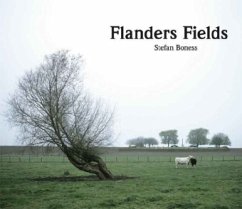
A Western Front photo book appeared in Germany in 2008, with colour photos by the professional German photographer Stefan Boneß and text by Tanja R. Müller, Flanders Fields: Eine fotografische Spurensuche auf den Schlachtfeldern des Ersten Weltkrieges (Bildschöne Bücher 2008). See photos published at independent.co.uk! See the web site of Stefan Boneß here. Also a collector's edition is published (limited to 3x10 copies, with signed print).


Verstild en Versteend/Weathered Witness: Relicten uit de Eerste Wereldoorlog from 2007 is a beautiful monocrome photography book with texts in both Dutch and English, by the photographer Patrick Goossens and text and research by Wim Degrande. Wim Degrande is well known among Western Front travellers and researchers. The book is published by Davidsfonds/Leuven (24 x 24 cm, 208 pages).

In combination with the publication of the book, a selection of the photographs could be seen in the exposition "Remembered and Forgotten" in the In Flanders Fields Museum at Ypres, July-August 2007.


Les Champs de la mémoire: Paysages de la Grande Guerre (Editions du Chêne 1998), by the British photographer John Foley and Anne Roze (author), has a preface by Jean Rouaud, the author of the 1990 bestseller Les Champs d'honneur (translations: Fields of Glory; Die Felder der Ehre; Ärans väg etc.), and was published in English already the following year, Fields of Memory: A Testimony to the Great War (Cassell 1999, and later paperback editions).


Also Traces de la grande guerre: Les vestiges oubliés de la mer du Nord à la Suisse (text in both English and French, published both in one and two volumes, Morval 1999), by the legendary French-American photographer Jean S. Cartier (born 1932, see more about J. S. Cartier here), has a preface by Jean Rouaud. Notice that there is also an older hardback edition of this book, published 1995 in a smaller edition.

From the photographer's web site: "This project, which aimed to record as many surviving vestiges of the conflict, was carried out over a twelve-year period with a large-format camera (4x5) along the 1914-1918 trench system stretching from the North Sea coast of Belgium to the French-Swiss border. More than 350 sites were surveyed."


The two later books above are very rare and expensive at the second-hand booksellers.


The Belgian/Netherland edition of National Geographic had an article, "Bewogen land", in the November 2004 issue, with some nice photographs by Tim Dirven.


This is an update of an older posting: Professional photography of the Western Front

1 Dec 2009

Fußnote zur Fußnote 40. 2.) Iffezheim


The steel cupola of the French Maginot Line on the western embankment of the Rhine about 500 meters south of the Wintersdorf Bridge (L78b road), the northern of the two bridges at Iffezheim.
Photo: Michael Pfahler © All rights reserved.


Auwaldhütte, 28. März 1940

“Seit zwei Tagen hause ich in meinem neuen Gefechtsstand, einer Holzhütte inmitten des lichten Auwaldgürtels, der den Rhein und die verschlungenen Altwasserarme vor Iffenzheim umschliesst. Erhöte Stege führen zu den Kampfbunkern am Flussufer.”

Auwaldhütte, 14. April 1940

“Am frühen Morgen weckten mich die Maschinengewehre vom Panzerwerk 'Roter Rhein' – das neue in der oberen Scharte des Panzerturmes und das überschwere, das unseren rechten Flügel flankiert. Ich rief Erichson an und gab ihm Feuerbefehl. Dann fuhr ich, nachdem ich mich hastig angezogen hatte, mit dem Rade durch den Auwald nach vorn.

Kurz vor dem Stand geriet ich in eine Garbe, die in die Pappelstämme klatschte, und suchte eilig den Verbindungsgraben auf. Spinelli, der bereits an Ort uns Stelle war und mit der Besatzung hinter der Betonwand des Bunkers stand, winkte mich richtig ein. Ich liess zwei schwere Gewehre auf die Scharten richten und teilte Scharfschützen ein. Dann ging ich, um noch einen guten Richtschützen zuzuziehen, zu Erichson, in dessen Kampfraum ich den Krankenträger fand. Er war damit beschäftigt, Erichson zu verbinden, der stark am Halse blutete, auch hatte er drei Schützen, die surch Splitter verletzt waren, mit Jod betupft. Sie waren alle benommen wie Fische, die plötzlich an die Luft gezogen sind.

Ich hörte, dass ein Schartentreffer mit lautem Knall und einem Feuerstrahl im Raum auseinandergeflogen war. Andere Geschosse hatten das Maschinengewehr am Lauf getroffen und das Zielfernrohr gekappt, das auf dem Tische lag. Zum Glück war auch Erichson nur leicht verletzt, so dass ich mich gleich wieder zu jenem Stande begeben konnte, der unser Brennpunkt ist.

Die Garbe strich noch durch den Wald, in dem mir der Verbindungsgraben zustatten kam. Freilich war er noch nicht durchlaufend ausgebaut, so dass es auch Stücke zu überspringen gab. Sehr gut die Kalkulation an Strecken, an denen es so über Deckung geht. Der Geist stellt immer eine scharfe Wahrscheinlichkeitsrechnung an, ehe der Körper springt.

Vor dem Stande hatte Spinelli schon alles aufgebaut. Ich ging noch einmal an das Scherenfernrohr und visierte die Scharte an, aus deren Schlitz ein neues und stärkeres Gewehr als jenes vor unserer letzten Räucherung hervorragte. Nachdem ich den Richtschützen eingeschärft hatte, dass es von ihnen abhänge, ob der Beschuss ernsthaft erwidert würde oder nicht, gab ich das Feuer frei. In diesem Augenblick strichen drüben, wie vor einer Zauberhandlung, zwei Elstern mit leuchtend weissem und erzgrünem Schimmer von den Bäumen über die Kuppel ab.

Dann hämmerten die Gewehre, und die glühenden Garben trafen sich im Schartengrund. Zuweilen griffen die Geschosse höher und schnitten den Pappeln, die im Innenhof des Werkes wachsen, die Zweige ab, oder sie rutschten, und die Einschläge stäubten auf den Beton der Mauer und spritzten in den Rhein. Andere zupften an der Trikolore, die neben dem Turme weht.

Ich sah, wie drüben das Gewehr das Feuer sogleich erwiderte, doch hörte nach einer kurzen Spanne das Stossen der von einem leichten Dampf umspielten Mündung auf. Ich hatte das vorausgesehen, denn das Dauerfeuer hält die Waffe gleich einer Zange fest, da die Bedienung nicht wagt, die währenddessen zurückzuziehen. So schlägt man sie mühelos entzwei.
Nach diesem Zwischenspiel ging ich zum Frühstück und war dann, wie jeden Sonntag, in Iffenzheim bei Dr. Eiermann, zu Hecht und Moselwein. Der Morgen war rein, klar, frisch in den Farben; auch kehrt im Feuer das Bewustsein, das sich doch stets in Teilen ausserhalb befindet, als aufmerksamer Wächter in den Körper zurück. Man fordert in der Krisis die Aussenstände ein.

Am Abend erfuhr ich, dass der pfenniggrosse Splitter, der Erichson getroffen hat, tief eingedrungen ist. Verletzungen am Hals sind immer peinlich, da sich durch diesen Teil die Lebensbahnen wie durch einen Isthmus ziehen.

Bei den Scharmützeln fühlt man sich hinter den Gewehren in der offenen Feuerstellung wohler als in den Bunkern am Feuerstand. Die winzigen Schlitze und Scharten, durch die das Auge des Verteidigers aus den festen Werken auf das Gelände späht, gleichen Magneten, die die Feuermassen des weiten Raumes auf sich ziehen. Auf diese Weise gerät die Mannschaft, wie in den Taucherglocken der Tiefsee, unter Überdruck. Die Werke sind Mammute des Widerstandes, aber vielleicht gerade deshalb vom Aussterben bedroht, weil der Gedanke der Verteidigung so rein in ihnen zum Ausdruck kommt."


Diary notes from the Westwall at Iffezheim, the Spring 1940.
Quotes from Ernst Jünger,
Strahlungen (Gärten und Strassen. Aus den Tagebüchern von 1939 und 1940),
published on the Internet at strahlungen2010.blogspot.com


Locating the fortifikations where Ernst Jünger was in the Iffezheim area is somewhat problematic as the riverbed of the Rhine has changed since the war. It is however more straightforward to find the French steel cupola "Roter Rhein". According to Boris Traub in Iffezheim there is only one such construction in the area at the French side of the river.


Location of a steel cupola (see picture above) of the French Maginot Line opposite Ernst Jünger at Iffezheim 1940, at point 119 on the French IGN map, close to a small marina.


Bunker at the German side of the Rhine, about 500 meters south of the Wintersdorf bridge, opposite the French steel cupola.
Photo: Michael Pfahler © All rights reserved.


Bunker at the German side of the Rhine, about 500 meters south of the Wintersdorf bridge, opposite the French steel cupola.

Photo: Michael Pfahler © All rights reserved.


Thanks for all help Michael Pfahler!

23 Sept 2009

The diary of Dieter Finzen


Follow the (multi-language) diary of the German soldier Dieter Finzen. The first entry was published at Das Kriegstagebuch von Dieter Finzen im 1. Weltkrieg - Wardiary of Dieter Finzen in WW1 the 12th September 2009.

For several other war diaries published on the Internet, see The archive of war diaries online!